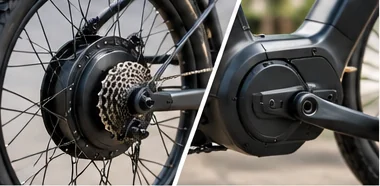
Motor placement changes how assistance feels, how the drivetrain is loaded, and what repair or maintenance work can look like.
Hub-drive simplicity
Hub motors deliver force at a wheel. They are common on commuter and value-priced designs and often feel straightforward to ride. Their behavior depends heavily on the controller and sensor.
Mid-drive climbing character
Mid-drives apply power near the cranks and through the bicycle drivetrain. They can make good use of bicycle gearing on sustained hills, but drivetrain wear and servicing deserve attention.
Torque sensors versus cadence
A torque sensor responds to pedal force, which often feels more natural. A cadence sensor responds to crank movement. Some systems offer hybrid or switchable modes.
Test your use case, not the label
For flat city trips, the better battery, fit and support network may matter more than motor position. For steep or technical routes, gearing and motor response rise in importance.
Editorial synthesis updated November 3, 2026. Educational material only; always verify model-specific claims at the manufacturer and local road/trail rules with the responsible authority.